
A technology roadmap template is a strategic document that lays out the plan for your business's technology, making sure every new project actually supports your long-term goals. For small and midsize businesses (SMBs), it’s the single most important tool for getting out of a reactive IT rut and into a proactive growth strategy focused on cybersecurity, AI, and the cloud.
Why Your SMB Needs a Technology Roadmap
Are you constantly putting out IT fires? Does it feel like you're always dealing with outdated systems or throwing money at tech that never seems to deliver a clear return on investment? If that sounds familiar, you're not alone. It's a common struggle for SMBs, and it drains resources that should be fueling your growth.
A technology roadmap template is your strategic compass. It turns that chaos into a clear, actionable plan.
This isn't just another document you create once and file away. It's a living guide that lines up your investments in critical areas like AI, cloud solutions, and cybersecurity directly with your most important business objectives.
From Reactive Spending to Proactive Strategy
Let me paint a picture. Imagine a midsize logistics company still running on an old on-premise server. Downtime is a regular headache, remote access is a clumsy mess, and their cybersecurity is weak enough to put sensitive client data at serious risk. Their IT budget gets eaten up by emergency repairs and temporary patches, so they never actually get ahead of their problems.
This is a classic case where a technology roadmap completely changes the game. By mapping out a multi-quarter plan, they could finally get strategic:
- Phase 1: Cloud Migration. First things first, they'd prioritize moving essential data and apps to a secure cloud environment. This move alone would immediately boost reliability and make access easier for everyone.
- Phase 2: AI Integration. Next, they could bring in an AI-powered logistics tool to optimize delivery routes and slash fuel costs, creating a direct impact on their bottom line.
- Phase 3: Cybersecurity Hardening. Finally, they would roll out advanced threat detection and get their team properly trained, which would significantly lower their risk of a breach. You can get a solid foundation on this topic by reading our detailed introduction to cybersecurity for small businesses.
This structured approach connects every tech dollar to a specific, measurable outcome. A key reason your SMB needs a technology roadmap is to strategically figure out how to streamline business processes, which is what really drives efficiency and growth.
This shift in thinking turns IT from a frustrating cost center into a powerful engine for improving everything from customer retention to operational excellence.
Laying Your Technology Roadmap Foundation
Before you even think about building a technology roadmap, you have to know exactly where you stand. I’ve seen too many roadmaps fail because they were built on guesswork. A plan built on a solid discovery phase, on the other hand, becomes a powerful tool for real growth. This means taking a hard, honest look at your current tech, your business goals, and your security posture.
First things first: you need a complete audit of your current technology stack. This isn’t just making a list of software you pay for. It’s about evaluating what’s actually working and, more importantly, what’s holding you back. Are you still chained to old on-premise servers that make remote work a nightmare? Is your team using a messy patchwork of random cloud apps that are poking huge holes in your security?
This audit is where the gold is. It will shine a light on critical gaps and prime opportunities, especially around cybersecurity, AI, and cloud solutions. It gives you the concrete data you need to justify every investment you plan to make.
Translating Business Goals into Tech Objectives
Your tech roadmap can’t live on an island. It has to be a direct extension of your company’s broader strategic planning process. This alignment ensures every dollar you spend on tech is pushing the entire business forward. The trick is to translate those big-picture business goals into tangible tech objectives.
Let’s say a key business goal is to "Increase customer retention by 15%." That's a great start, but how does technology get you there? You break it down.
- Cybersecurity Initiative: You could implement stronger data protection. This builds trust with your customers and prevents a data breach that could send them running to a competitor.
- Cloud Solution Initiative: Maybe it’s time to move your CRM to a modern, scalable cloud platform. Better access and reliability for your team means a better experience for your customers.
- AI Initiative: You could deploy an AI-powered chatbot on your website. This offers instant support, improves the customer experience, and solves problems faster than a human team ever could.
See how that works? This approach guarantees that your IT investments aren't just technical busywork. They become direct, measurable contributors to your bottom line, bridging the gap between the server room and the boardroom.
Engaging Non-Technical Stakeholders
One of the biggest mistakes I see is a roadmap built in an IT silo. To create something that actually works for the whole company, you absolutely must talk to leaders from every department—sales, marketing, operations, you name it. These conversations are where you uncover the hidden pain points and opportunities an IT-only view would completely miss.
A successful technology roadmap is a shared vision. It requires translating technical jargon into business outcomes that resonate with everyone, from the CEO to the sales team. This alignment is where a virtual CIO provides immense value.
Forget the tech-speak. Ask open-ended questions to get to the heart of their daily struggles and strategic goals. For instance, walk over to the sales manager and ask, "What is the biggest technological bottleneck slowing down your team's ability to close deals?" Their answer might point to a clunky CRM or a lack of mobile access—problems that have clear technology solutions.
Pulling this kind of insight out of people often requires a specific skill set, which is a core function of expert IT leadership. By gathering this diverse input, your roadmap becomes a true reflection of the entire organization’s needs. This creates the buy-in you need from day one and sets the stage for a smooth, successful implementation.
Structuring Your Future-Proof Roadmap
Alright, you've got a handle on where you stand today. Now for the fun part: building the actual roadmap template that will guide your tech decisions for the next few years. This isn't just about making a laundry list of IT projects. A great roadmap tells a story—it weaves your individual initiatives into clear, powerful themes that show why you're doing what you're doing.
For a small or midsize business, this is everything. You can't afford to chase every shiny new object. Instead, you need to focus on a few high-impact themes like cybersecurity, cloud infrastructure, and AI-driven efficiency. These become the backbone of your strategy, guiding every single dollar you invest.
Defining Strategic Themes and Initiatives
First things first, let's group your goals into broad, overarching themes. Think of these as the main chapters in your technology story. They should tie directly back to what the business is trying to achieve, making it way easier to get buy-in from people who don't live and breathe IT every day.
Here are a few examples I often recommend to clients:
Theme 1: Enhance Cyber Resilience
This one's non-negotiable. It’s all about building a digital fortress to defend against the constant barrage of online threats.- Initiative: Roll out Multi-Factor Authentication (MFA) across every critical system. No exceptions.
- Initiative: Kick off quarterly cybersecurity awareness training for all staff—turning your team into a human firewall.
Theme 2: Modernize Cloud Infrastructure
This theme is your ticket out of clunky, on-premise hardware. The goal is to move toward a flexible, scalable cloud setup that can grow with you.Theme 3: Drive Efficiency with AI
Here's where you can really pull ahead of the competition. This is about using smart tech to automate repetitive tasks and get closer to your customers.- Initiative: Put an AI-powered chatbot on your website to handle those common, first-level customer questions 24/7.
- Initiative: Deploy a simple AI tool to dig through your sales data and uncover hidden trends or new opportunities.
This flow isn't just a nice-to-have diagram; it's the core process. You audit what you have, analyze what it means, and then align everything with your big-picture goals. Following this ensures your roadmap is built on solid data, not just a hunch.
Cybersecurity, in particular, is a massive concern for every SMB. With global cybercrime costs predicted to hit an eye-watering $10.5 trillion by 2025, you can't afford to treat security as an afterthought. This reality is forcing companies to bake security initiatives directly into their roadmaps from day one, turning them from simple planning documents into vital tools for survival and trust.
When you start grouping initiatives into themes, it becomes much easier to see where your priorities should lie. Not every project is created equal, and you have to balance the potential wins against the effort required.
We can use a simple framework to help sort this out.
Prioritizing Initiatives in Your Technology Roadmap
A common trap is trying to do everything at once. This table offers a straightforward way to rank your projects by weighing their business impact against the implementation effort. It helps you focus on the quick wins first while planning for the bigger, more complex initiatives down the line.
| Priority Level | Initiative Type (Example) | Business Impact | Implementation Effort | Focus Area |
|---|---|---|---|---|
| P1 – Quick Win | Implement MFA | High | Low | Security |
| P2 – Major Project | Cloud Server Migration | High | High | Infrastructure |
| P3 – Optimization | AI Sales Data Analysis | Medium | Medium | Efficiency |
| P4 – Foundational | Cybersecurity Training | Medium | Low | Security |
| P5 – Long-Term | AI Chatbot Integration | High | Medium | Customer Experience |
By categorizing your initiatives this way, you create a logical sequence. You tackle the P1 "quick wins" to build momentum and then strategically allocate resources for the larger P2 projects that require more heavy lifting.
Mapping Timelines and Budgets
Once your themes and initiatives are defined and prioritized, it's time to attach them to a realistic timeline and budget. The key here is to avoid getting lost in the weeds. A roadmap isn't a detailed, Gantt-chart-style project plan.
A technology roadmap should be a compass, not a GPS. It provides direction and major milestones but allows for flexibility to navigate unexpected challenges and opportunities along the way.
Let’s walk through a real-world example. Imagine a mid-size e-commerce business laying out its plan for the year. Their roadmap might look something like this:
Quarters 1-2: Focus on Cloud and Security Foundations
- Budget Allocation: 50%
- Key Projects: Get the main e-commerce platform migrated to a scalable cloud host. At the same time, roll out MFA company-wide and conduct the first round of security training.
Quarters 3-4: Introduce AI and Optimize
- Budget Allocation: 30%
- Key Projects: With the platform now stable in the cloud, deploy the AI chatbot. Start using analytics tools to dig into customer data for valuable insights.
Ongoing Throughout the Year
- Budget Allocation: 20%
- Key Projects: Continuous security monitoring, regular system maintenance, and ongoing staff training refreshers.
This phased approach is smart. It ensures the foundational pieces—like a secure and stable cloud environment—are locked in before they start building more advanced features on top. It breaks the plan into manageable, affordable chunks and dramatically increases the odds of success.
Bringing Your Technology Roadmap to Life
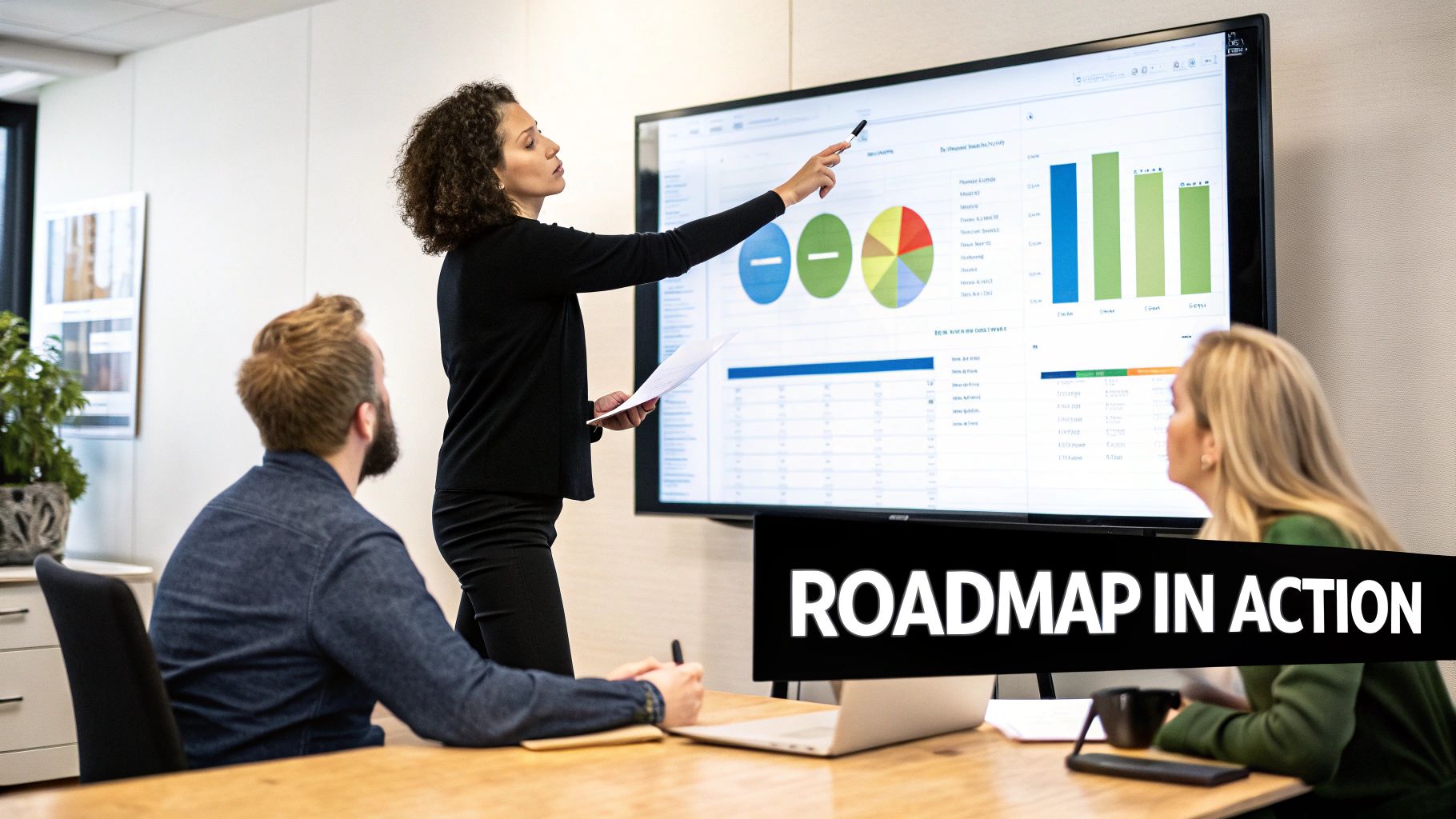
Let's be honest. A perfectly structured technology roadmap is a great start, but it’s worthless if it just collects dust in a shared drive. I've seen it happen too many times.
The real value—the part that actually moves the needle for your business—comes from execution. A plan only becomes a strategy when you actively communicate it, get everyone on board, and build a rhythm for keeping it current.
For most small and midsize businesses, this is where the wheels fall off. The daily grind of just running the company pushes strategic work to the back burner. This is the moment you have to be disciplined and turn that static document into a living, breathing management tool.
Securing Buy-in and Communicating Value
Your first move is to get enthusiastic support from the top. And I don’t just mean a signature on a budget request. Executive buy-in is about making sure leadership genuinely understands the why behind every single initiative.
You have to frame your roadmap presentation around business outcomes, not technical jargon.
So, instead of saying, "We need to migrate to a cloud server," you explain how that move will improve system uptime, beef up data security, and enable flexible remote work—all things that directly boost productivity and profitability.
A great roadmap tells a story of business growth powered by technology. When you can clearly articulate how a new AI tool will slash operational costs or how stronger cybersecurity protects customer trust, the conversation shifts from an expense to a crucial investment.
This clear communication is essential. Explaining how your cloud strategy reduces risk or how an AI implementation drives revenue is what gets executives and board members to approve the necessary investments for a successful technology rollout.
Establishing Governance and Ownership
Once you have buy-in, you need a simple framework to keep things moving. This doesn't have to be some overly complicated, bureaucratic process. The goal is clarity and accountability so everyone knows exactly what their role is.
- Assign Clear Ownership: Every major initiative on your roadmap needs one designated owner. This is the person responsible for championing the project, wrangling resources, and reporting on progress. No ambiguity.
- Establish a Review Cadence: Schedule regular check-ins. A quarterly review with leadership is perfect for looking at progress against goals and making strategic tweaks. Then, have monthly or bi-weekly huddles with the project teams to keep the day-to-day work on track.
- Create a Simple Change Process: Business priorities shift. It happens. Your roadmap has to be flexible enough to adapt. Define a straightforward process for someone to propose, evaluate, and get approval for changes to the plan.
This simple structure is what prevents your roadmap from becoming obsolete in three months. For businesses that don't have a dedicated IT director, partnering with a provider of managed IT services can be a game-changer for establishing and maintaining this governance, ensuring your plan stays on course.
Tracking Progress with Meaningful KPIs
Finally, you have to prove your roadmap is actually working. The best way to do that is by tracking Key Performance Indicators (KPIs) that tie directly back to business value. Generic metrics won't cut it. You need to choose KPIs that show a clear return on your technology investments.
Here are a few powerful examples for an SMB focused on cloud, AI, and security:
- Reduction in Security Incidents: This is a direct measure of how effective your cybersecurity initiatives are.
- Improvement in System Uptime: A crucial metric that shows the real-world impact of cloud infrastructure upgrades.
- Decrease in Helpdesk Ticket Volume: This indicates that new cloud systems or AI tools are more reliable and easier for your team to use.
By consistently tracking and reporting on these KPIs, you create a powerful feedback loop. You can celebrate wins, justify future spending, and show everyone in the company how technology is actively driving business success.